
Difference: Spot & Find Master
LifePulse Puzzle Game StudioPuzzle
4.9680.00 Reviews
- Version
- 1.2.5
- Installs
- 10.00M
- Age Rating
- Everyone
Screenshots




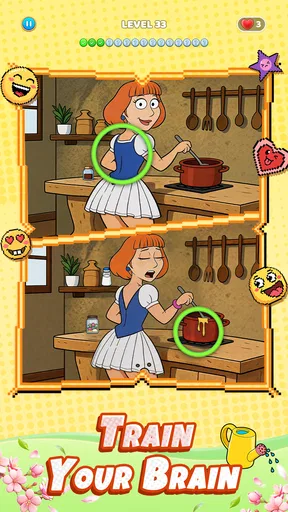

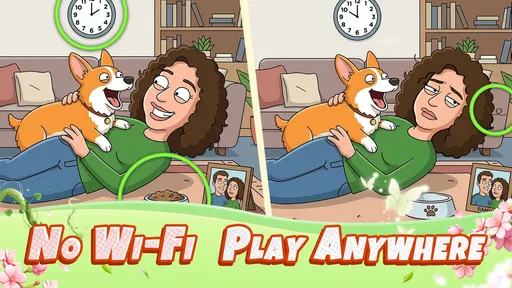

Our Review of Difference: Spot & Find Master
 Analysis by Appyee
I enjoy puzzle games that give me something to do without demanding a long explanation, and Difference: Spot & Find Master fits that mood immediately. It is a free photo-difference game from LifePulse Puzzle Game Studio, built around a simple task: compare two images, notice what changed, and tap the right places. That sounds familiar, but the appeal comes from how easily the format turns a few spare minutes into focused play.
After spending time with it, I see the game as a calm choice for people who like visual observation more than fast reflexes. It belongs to the puzzle category, carries an Everyone age rating, and is available for devices running Android 6.0 or later. The current version is 1.2.5, while its March 24, 2025 release places it among relatively recent options in this style.
The store summary describes a relaxing way to find differences in photos, and that is a fair description without telling the whole story. The important question is whether the small interactions remain satisfying after the novelty fades, whether the game feels comfortable during longer sessions, and whether it behaves well on older phones. My overall impression is positive, although the deliberately simple design will not suit players looking for a large adventure, deep progression, or constant variety.
How the visual puzzles feel in everyday play
I find the visual puzzles easiest to enjoy when I treat each pair as a small, deliberate search rather than a race: scan one area, compare shapes and gaps, then move on. That keeps a missed detail from turning into random tapping and makes the game a better fit for a short pause in the day. Next, I’ll look at how that simple loop holds up when you settle in for more than one puzzle.
A quick start with almost no learning curve
The strongest part of the design is its accessibility. I do not need to learn a complicated control scheme or remember a set of rules before starting. The central action is visual comparison, so the challenge begins as soon as the images appear. That makes it suitable for a short break, a quiet evening, or a shared moment when someone wants a puzzle that can be understood in seconds.
This simplicity also makes the game approachable for a broad age range. Younger players can practice attention and visual scanning, while adults can use it as a low-pressure mental reset. Because the age rating is Everyone, it is an easy recommendation for households seeking a gentle puzzle rather than an intense action game. I would still choose levels according to the player’s patience, since careful image checking can become tiring even when the rules are easy.
The best way to play is not to stare randomly at the entire picture. I get better results by dividing each image into zones: upper corners, central objects, edges, and background details. I compare one zone at a time and then move to the next. This prevents the eye from repeatedly jumping toward the most obvious object while missing a small change elsewhere.
Why the pace feels relaxing
Difference: Spot & Find Master is naturally slower than match-three games or timed reaction puzzles. Its main demand is concentration, not rapid tapping. That gives it a calmer rhythm, particularly when I want to play without sound or without committing to a long session. The game works well as a quiet distraction during a commute, while waiting for an appointment, or before bed when a competitive game would feel too stimulating.
There is a useful trade-off here. A relaxed pace gives the player room to inspect details, but it can also make a difficult image feel repetitive if progress depends on finding one tiny visual change. When I reach that point, I stop scanning the whole picture and compare structural lines instead: the outline of a building, the shape of a plant, the border of an object, or the spacing between repeated elements. This is more effective than zooming mentally into the most colorful area.
The game’s appeal depends heavily on the quality and readability of its image pairs. Clear compositions make the search feel fair, while visually busy scenes can turn the same mechanic into guesswork. That is not a flaw unique to this title, but it matters because the entire experience rests on whether the differences feel discoverable rather than hidden for the sake of delay.
What happens during longer sessions
For short play, the lightweight concept is an advantage. During a longer sitting, however, the repeated structure becomes more noticeable. Players who enjoy the familiar “compare, inspect, tap” loop may find that repetition soothing. I think of it as similar to a word-search book: the pleasure comes from concentration and completion, not from a constantly changing system.
Heavy use is therefore less about complicated gameplay and more about mental fatigue. After several puzzles, I find that my eyes become less reliable, especially when I continue searching without a break. A practical routine is to pause after a difficult image, look away from the screen, and return with a fresh scan. This is a small habit, but it improves accuracy more than frantic tapping does.
Another useful approach is to compare negative space. Players often inspect the main subjects first, yet a difference may be easier to notice in the empty area around them. Check gaps between objects, background shapes, repeated patterns, and straight lines. This method is particularly helpful when the foreground looks nearly identical.
Speed expectations and perceived responsiveness
For a game based on tapping visual details, perceived speed matters even though the gameplay itself is unhurried. I expect the image to appear promptly, the screen to react when I identify a difference, and the transition between actions to feel clear. The straightforward format gives the app a good foundation for that kind of responsiveness because it does not ask the player to manage a complicated interface while searching.
Still, I would not judge performance only by how fast a puzzle opens. A smooth experience also means that taps are easy to interpret and that the visual layout does not make the player question whether a touch registered. In a difference game, uncertainty is especially frustrating: if I tap a suspected area and receive no obvious response, I may wonder whether I missed the target or whether the interaction failed.
My practical advice is to play with the display clean and your finger positioned carefully. Tapping repeatedly around a suspected spot can make the search less precise, while a deliberate tap gives you better feedback about your accuracy. The game rewards observation, so treating every tap as a considered answer feels more natural than tapping rapidly across a region.
Resource demands and device comfort
The concept suggests a lighter workload than games built around continuous animation, large worlds, or online competition. That makes Difference: Spot & Find Master a sensible candidate for a broad range of Android phones, including devices that are not recent, provided they meet the Android 6.0 minimum requirement. I would not buy a new phone for it, and I would not expect it to be a demanding test of modern hardware.
Image-based puzzles can still make a device feel less comfortable if the screen is small, dim, or difficult to view from an angle. The challenge is visual rather than computational, so display quality affects enjoyment more directly than raw processing power. On a compact phone, tiny details may require extra concentration; on a larger screen, comparing separate regions feels more natural.
Battery expectations should also be realistic. A simple puzzle format is generally easier to live with than a graphically intense game, but extended screen time still uses power. If I am playing during travel, I prefer shorter sessions and lower screen brightness where comfortable. That is not a special setting I am attributing to the game; it is simply the most sensible way to use any visual puzzle away from a charger.
Stability, interruptions, and recovery
A reliable puzzle game should let me return to the task without making the experience feel fragile. In normal use, the important recovery moments are ordinary ones: switching briefly to another app, locking the screen, or pausing because attention has drifted. I value a game more when these interruptions do not turn a relaxed session into a stressful restart.
I avoid making absolute claims about stability across every phone because Android devices vary widely in memory, screen size, manufacturer software, and background activity. What I can say is that this game’s uncomplicated premise gives it a practical advantage: there are fewer moving parts for the player to manage than in a large online title. If the app ever feels slow after extended use, closing other demanding apps and reopening the game is a reasonable first step.
Recovery is also a matter of the player’s own workflow. Before leaving a difficult puzzle, I prefer to finish the current thought rather than switch away immediately after tapping. That reduces the chance of returning unsure about which areas I already checked. For a game built around visual memory, even a short interruption can make the image feel unfamiliar again.
Where it fits beside other puzzle choices
Compared with match-three games, this title is less dependent on combinations, streaks, or rapid board changes. Compared with word puzzles, it tests visual attention rather than vocabulary. Compared with hidden-object games, the task is narrower: I am comparing paired images instead of searching a single scene for a long list of unrelated items. That focused structure is exactly why I would recommend it to someone who wants a clear objective without a large amount of text.
The trade-off is depth. A player who wants character development, strategic planning, competitive rankings, or an evolving story will likely be happier with another puzzle subgenre. This game is better for the person who enjoys small, self-contained challenges and the satisfaction of noticing something that initially blends into the picture.
It also has an advantage over many more complicated alternatives when attention is limited. I can begin without remembering a previous strategy or rebuilding a collection. The mental commitment is simply to inspect the current pair. That makes it particularly useful for short sessions, although players who need strong long-term progression may find the experience too narrow.
Who should install it, and who should skip it
I would recommend Difference: Spot & Find Master to casual puzzle fans, families looking for an approachable visual activity, and anyone who likes quiet games that reward patience. It is also a good fit for players who prefer free access and want to try the central idea without paying before deciding whether it belongs in their routine. The game’s popularity is substantial, with more than ten million installs and an average rating of 4.9 from roughly one hundred six thousand ratings, which suggests that the basic format has connected with a large audience.
I would be more cautious about recommending it to someone who gets frustrated by tiny visual details, has difficulty distinguishing subtle changes, or wants every session to introduce a new mechanic. The same calm simplicity that makes the game approachable can feel limited to players who need constant novelty. It is also not my first choice for a competitive player who wants fast decisions and measurable tactical improvement.
Because it is free, the barrier to trying it is low, but that does not mean it will suit everyone. The right question is whether you enjoy the act of looking carefully. If you do, the game can turn an ordinary waiting period into a satisfying observation exercise. If you prefer puzzles with planning, words, numbers, or action, a different category will probably hold your attention longer.
My practical performance verdict
My performance-focused verdict is favorable, with the right expectations. Difference: Spot & Find Master appears best suited to light, focused sessions rather than demanding all-day play. Its uncomplicated visual loop should feel less resource-heavy than a large action or simulation game, while the Android 6.0 requirement keeps it accessible to many older devices. The bigger performance concern is not likely to be dramatic graphics; it is whether your screen makes small details comfortable to inspect.
For the smoothest experience, I would use a clean screen, hold the phone at a comfortable distance, and take short breaks during difficult searches. I would also avoid judging the game by a single frustrating image. A hard puzzle can be satisfying when the difference is subtle but fair; it becomes tiring when I keep repeating the same scan without changing my method.
The developer, LifePulse Puzzle Game Studio, has chosen a focused identity rather than trying to combine visual puzzles with unrelated systems. That focus is a strength when I want a game I can understand instantly. It is a weakness only when I expect a deep progression structure or a constantly changing challenge.
Final recommendation for everyday players
After using it as a casual visual puzzle, I see Difference: Spot & Find Master as a dependable choice for calm observation rather than a feature-packed gaming experience. It is free, rated for Everyone, and available on Android devices from version 6.0 onward, so it is easy to consider for a family phone or an older spare device. Its 4.9 average and large install base reinforce the impression that the central idea works for many players, though popularity cannot replace personal preference.
The best reason to try it is simple: it turns careful looking into a small, satisfying break. I would install it when I wanted something quieter than an arcade game and more active than passively scrolling. I would skip it when I needed story, strategy, competition, or a steady stream of new mechanics.
In the end, this is a focused photo-difference puzzle with a low entry barrier and a gentle pace. Its success depends on whether the visual comparisons remain readable and whether the player enjoys patience more than speed. For that specific audience, I think it is an easy recommendation; for everyone else, its free access makes a brief trial the most sensible way to decide.
Verdict
Strengths of Difference: Spot & Find Master
- Simple spot-the-difference gameplay suitable for casual players.
- Short levels make it easy to play during quick breaks.
- Visual puzzles help improve attention to small details.
- Bright artwork keeps the scenes engaging and easy to scan.
- Progressive challenges provide a satisfying sense of advancement.
Limitations of Difference: Spot & Find Master
- Some differences can feel overly hidden rather than skill-based.
- Hints may be limited or require watching ads to obtain.
- Difficulty can vary noticeably between consecutive levels.
- Repeated puzzle patterns may reduce long-term replay value.
- Ads can interrupt the experience between completed puzzles.
Other Releases by LifePulse Puzzle Game Studio
View All


Similar Picks in This Category
View All
Block Blast!
HungryStudio4.8

Braindom: Brain Games Test
Lahana Game Studio4.6

AMAZE!
CrazyLabs LTD4.6

Sudoku - Classic Sudoku Puzzle
Oakever Games4.7

Art Puzzle - Puzzle Games
Easybrain4.8

Amaze GO!
Oakever Games4.9
Frequently Asked Questions
What is Difference: Spot & Find Master?
Difference: Spot & Find Master is a visual puzzle game based on the classic spot-the-difference challenge. You compare two similar images and identify the objects, details, or small changes that do not match. The game is designed for short or extended play sessions and gradually tests observation, concentration, memory, and attention to detail through a variety of illustrated levels.
How do you play Difference: Spot & Find Master?
Each level presents two images that look almost identical. Your objective is to tap the differences before you run out of available mistakes, time, or other level-specific limits. Differences can include missing objects, altered colors, changed shapes, or small details in the background. If you become stuck, the game may provide hints, although these can be limited or connected to in-game resources.
Is Difference: Spot & Find Master free to download and play?
The game can generally be downloaded without an initial purchase, allowing players to try its core spot-the-difference puzzles at no cost. However, the free experience may include advertisements, optional purchases, or limitations involving hints, lives, coins, or additional content. Before downloading, users should check the current store listing because pricing, advertising, and available purchases can vary by platform and region.
Does Difference: Spot & Find Master require an internet connection?
Some parts of Difference: Spot & Find Master may work without a constant internet connection, particularly previously loaded puzzles and basic gameplay. Nevertheless, an internet connection may be required for advertisements, synchronization, updates, cloud features, rewards, or loading new levels. Offline availability can also differ between Android and iOS versions, so it is best to test the game after installation rather than assume every feature works offline.
Is Difference: Spot & Find Master suitable for children and casual players?
The simple tap-based controls and easy-to-understand objective make Difference: Spot & Find Master approachable for casual players and many children. It can also encourage careful observation and concentration. Parents should still review the age rating, advertising, in-app purchase options, and privacy information before allowing younger users to play, since these details may change with updates and can differ between the Android and iOS editions.
Play our best games!


